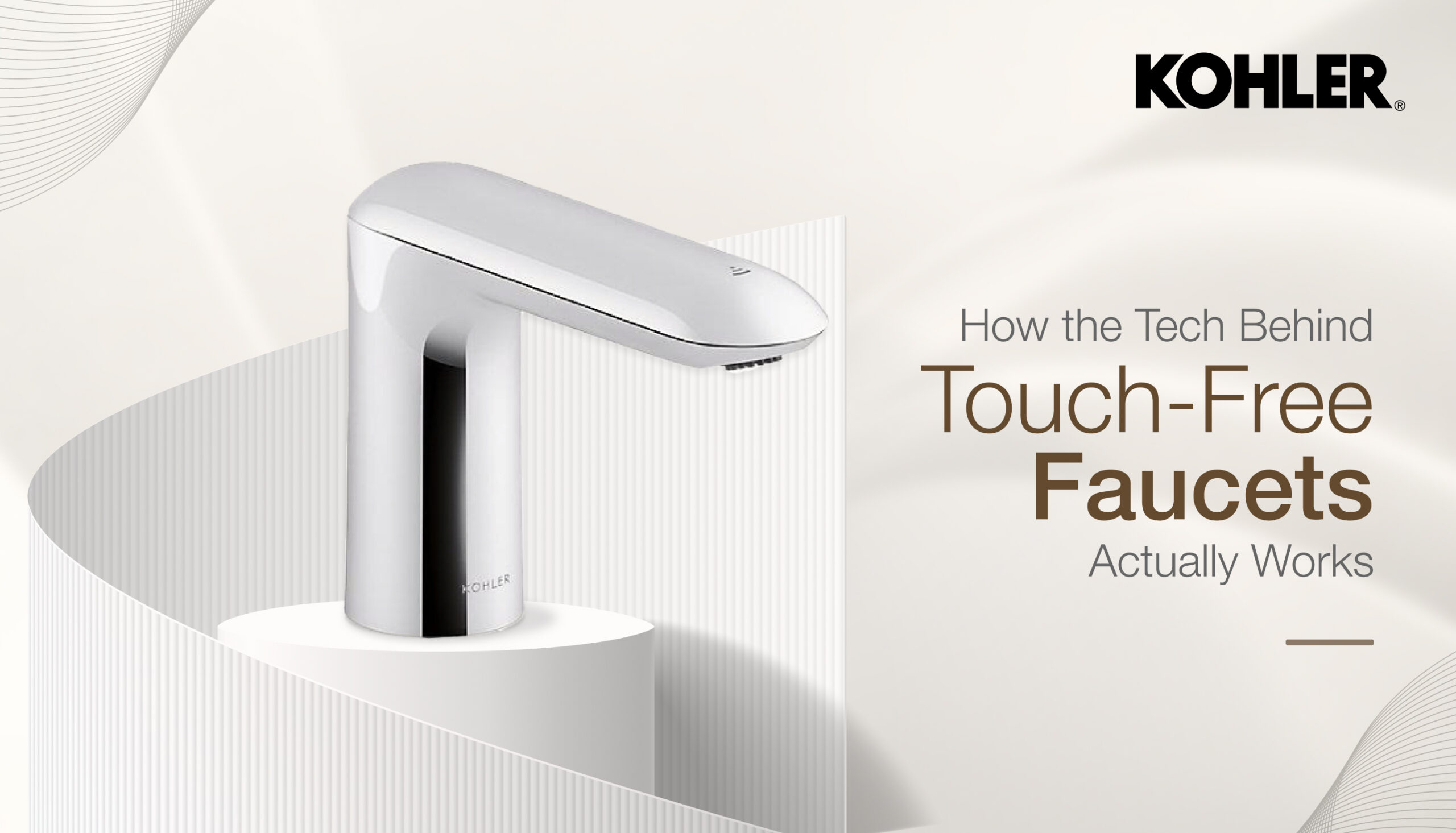
For people exploring sensor faucets, the appeal becomes clear very quickly. You walk up, place your hands in position and water starts right when you need it. The experience feels clean, quick and easy, which explains why this category has moved from commercial spaces into modern homes as well.
The First Step Happens at the Sensor
A touchless faucet looks simple from the outside, with no handles or visible interaction. The process actually begins at the sensing point. When your hand enters the detection range, the sensor registers the change in proximity and immediately converts that into an electrical signal, which is passed into the system to initiate water flow.
In daily use, that quick signal is what creates the smooth feeling people notice first. Water arrives almost instantly, the user experience feels intuitive and the wash area stays more orderly because operation happens through motion rather than repeated handle contact. That is a big reason touchless fittings feel especially suited to family bathrooms, powder rooms and high-use shared spaces.
The Main Parts Working Together Inside
Most people see the spout and handle area. The real automatic faucet system, though, sits behind the visible finish. One part reads movement. Another processes that input. Another controls the water path.
The sensor passes its input to a control board that reads the signal and determines the response. The system stays active through a steady power supply. When movement is detected, the control unit triggers the solenoid valve to open or close and control water flow.
The solenoid valve controls how water moves through the faucet. After the signal is processed, the valve opens to let water pass. When the cycle ends, it shuts again, stopping the flow without any manual action. When the activation cycle ends, the valve closes again. Some systems also include a manual override, which adds practical flexibility for everyday use.
Power is another key part of the experience. Depending on the model, touchless systems may run through AC power or battery power. This flexibility helps the technology fit different installation conditions and project needs.
What Makes the Water Flow Feel Smooth
The best touchless products feel easy because the user only sees the result, not the sequence. Good sensing, stable power and reliable valve response create that feeling.
Another useful feature is timed shutoff. Many models include automatic shutoff after a fixed period of inactivity. This supports controlled water use and keeps the system running efficiently even in busy environments.
Why this Technology Matters in Real Spaces
A well-made touchless fitting changes how a wash area feels. The benefit goes beyond modern styling. The space feels easier to use during cooking, handwashing and quick cleanups.
In family homes, that creates a more comfortable routine. In offices, retail spaces and hospitality settings, this setup helps keep wash areas cleaner and easier to manage, particularly in spaces used by many people through the day.
From a functional perspective, Kohler sensor faucets offer a clear upgrade in how water fixtures are used day to day. The range is built to perform across different environments, with configurations that suit both residential use and high-frequency commercial settings.
What to Look For Before Choosing One
When selecting a sensor tap model, focus on a few practical factors. Start with the intended use, since a residential bathroom, a guest wash area and a kitchen each come with different usage patterns.
Second, pay attention to the power setup. Some spaces suit battery operation while others work well with an AC connection.
Third, consider maintenance access. Since the system includes electronic and valve components under the sink or behind the installation area, easy service access always adds value.
At a broader level, the real strength of the category is how neatly design and function come together. You get a cleaner user journey, quick activation and a more contemporary feel around the basin or sink. That is what gives the technology staying power. And when a brand builds the system around proven control parts, power options and reliable response, the final experience feels polished from the first use. A well-chosen Kohler Bangladesh solution can improve how the space functions, with smoother use and more consistent water flow day to day.
Frequently Asked Questions
How does a sensor tap know when to start water flow?
It works through motion sensing that detects your hand within a set activation range. Once detected, the system processes the input and signals the valve to open, allowing water to flow without physical contact.
Does an automatic faucet need a power source?
Yes. Depending on the model, power may come from batteries or from an AC connection.
Are touchless faucets difficult to maintain?
Routine care stays fairly straightforward. Cleaning the sensor area, checking the aerator and keeping the service components accessible usually support smooth long-term performance.
Do these faucets include backup operation features?
Some systems include a manual override at the valve, which helps keep the fixture usable during service situations.